The Mistaken Hat
He stood up to leave, reached out calmly, and lifted his wife’s head, believing it was his hat.
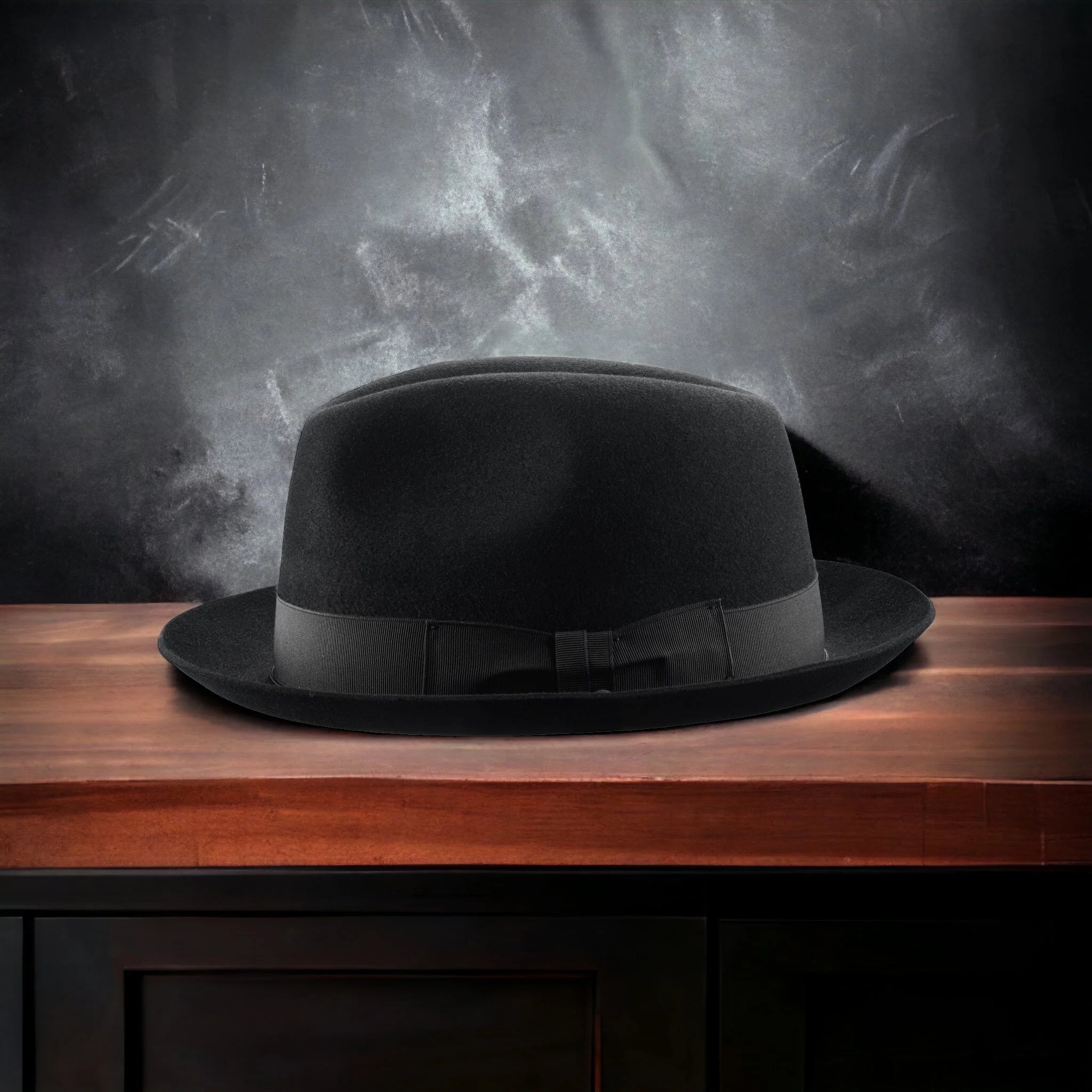
He stood up to leave, reached out calmly, and lifted his wife’s head, believing it was his hat. This was an action performed by Dr. P, a real patient described by neurologist Oliver Sacks in his nonfiction book The Man Who Mistook His Wife for a Hat and Other Clinical Tales. While Dr. P’s eyes worked perfectly, he couldn’t recognize what he was seeing. In this month’s post, I want to briefly retell the case, explain the neurological condition behind it, and bring in modern science that Oliver Sacks didn’t have in 1985. Dr. P’s actions remind us that vision isn’t just about the eyes, it’s about how the brain makes meaning.
The Case
Dr. P was a respected music teacher, intelligent, calm, and artistic. He came into Dr. Sacks’s office after his wife reported strange visual problems, such as not being able to recognize his own students by their faces. An ophthalmologist suspected a neurological issue and referred him to Dr. Sacks. Dr. P initially thought he might have diabetes, but after seeing a specialist, he was sent to Sacks for further evaluation.
During Dr. Sacks’s first meeting with Dr. P, he noticed that Dr. P examined faces like math problems, focusing on individual details instead of the whole. In a brief examination, Dr. P took off his shoe and then mistakenly claimed that the shoe was his foot. He also failed to identify basic pictures. After the appointment, Dr. P searched for his hat, reached toward his wife, and tried to lift her head. He was not being humorous or confused. His brain processed her head as a hat-shaped object. To understand how such a smart musician could misrecognize his own wife, we need to explore visual agnosia.
What Is Visual Agnosia?
Visual agnosia is a neurological disorder where a person cannot recognize or identify objects by sight, even with normal vision, language, and memory. Normally, the eyes capture light, the occipital lobe processes basic shapes, and information travels to the ventral stream in the temporal lobe. Dr. P had damage along this pathway. He could see fine detail but couldn’t assemble details into meaningful wholes.
He could describe the shape of a rose but could not identify it until he smelled it. He could copy drawings perfectly yet fail to recognize what he had drawn. In essence, Dr. P could see the ingredients, not the recipe.
Modern Neuroscience Update
In the 1980s, Oliver Sacks did not have access to fMRI or advanced neuroimaging tools. Today, researchers can pinpoint specialized cortical regions with remarkable precision. The Fusiform Face Area (FFA) is crucial for face recognition. The Lateral Occipital Complex (LOC) processes object shapes. The Parahippocampal Place Area (PPA) specializes in scene recognition. Dr. P’s unusual symptoms suggest damage across multiple regions, especially the FFA and adjacent object-recognition zones, which explains his fragmented visual perception.
Modern neuroscience also describes the brain as a “prediction machine.” Vision is not a passive recording of stimuli. It is an active process where the brain constantly infers what objects are based on context. In Dr. P’s case, bottom-up processing, which comes from raw sensory input, remained intact. Top-down processing, which relies on prior knowledge and expectations, was severely impaired.
Dr. P’s condition is best understood as visual agnosia with prosopagnosia features. Prosopagnosia, often called face blindness, specifically impairs face recognition. Individuals with prosopagnosia often rely on voice, posture, or clothing to identify people. These are the same strategies Dr. P adopted. In typical perception, faces are processed as unified wholes. Dr. P’s feature-by-feature inspection reflects a classic breakdown seen in prosopagnosia.
Deep learning vision networks provide a useful parallel. These systems mimic the ventral stream of human vision. When researchers “damage” the middle layers of these networks, the models can still detect edges and basic shapes but cannot recognize complex objects. This artificial breakdown mirrors Dr. P’s experience and supports Sacks’s observations. It shows how neuroscience and machine learning converge to explain perception and its failures.
The Human Side of the Disorder
Despite his deficits in visual processing, Dr. P lived a structured and meaningful life. Sacks noted that Dr. P related to the world through music. He dressed, ate, and moved according to rhythm. Modern patients with visual agnosia often use similar coping strategies:
- Labeling household objects
- Organizing items by texture or sound
- Relying on routines
There is also an emotional impact, including confusion, embarrassment, and loss of independence. However, people often develop resilience and adaptability. Even when visual meaning faded, Dr. P found stability in the patterns and melodies that made sense to him. This is an inspiring message to live by.
What This Case Reveals About the Brain
Dr. P’s story shows that seeing is not a simple act of receiving images. It is an active construction where the brain stitches together shapes, colors, and context to form meaning. When one part of this system falters, the entire experience of reality can become unstable. As Sacks wrote, perception is not the world itself but the brain’s best guess at it.
Modern neuroscience supports this idea. Research on predictive processing and specialized visual regions confirms that vision is a dynamic process of inference. Artificial intelligence models echo this too. When their recognition layers are disrupted, they can still detect edges but fail to identify complex objects. Sacks’s observations came decades before these tools existed, yet they anticipated how fragile and astonishing our interpretive machinery is.
The moment when Dr. P mistook his wife’s head for a hat captures the link between sight and understanding. Sacks’s case endures not only as a medical puzzle but also as a human story that blends science with empathy. Today’s neuroscience offers deeper explanations, yet the mystery remains. In Dr. P’s mistake, we see the delicate processes that allow the brain to transform light into meaning. It reminds us that perception is both science and mystery, and that our grasp on reality is more miraculous than it seems.
Get the next one by email